Learn how to spot the best Halloween candy for your teeth and which sweets to limit to help prevent cavities and protect your smile.

When you eat sugary foods, bacteria in your mouth feed on the sugars and produce acids that attack tooth enamel. Over time, repeated acid attacks can weaken enamel and lead to cavities.
According to the National Institute of Dental and Craniofacial Research, these acid attacks cause tooth enamel to lose minerals. Saliva helps restore some of those minerals, while fluoride strengthens enamel and protects against tooth decay.
When it comes to how Halloween candy affects your teeth, how often you eat sweets matters too. Frequently snacking on candy or sucking on hard sweets over an extended period exposes your teeth to repeated acid attacks. Giving your teeth a break between sugary treats allows saliva more time to help neutralize acids and restore lost minerals.
When choosing the best Halloween candy for your teeth, consider how much sugar a treat contains and whether it is likely to stick to your teeth. Some candies are easier to clear from the mouth than others, which can make them a better choice for your dental health.
Plain chocolate: Chocolate is generally a better option than sticky sweets (such as caramels and taffy) because it tends to clear from the mouth more easily. Choose varieties without caramel, toffee, or other sticky fillings that can leave sugary residue on teeth.
Sugar-free candy: Sugar-free varieties are generally less likely to cause cavities because they do not contain the sugars that bacteria feed on. However, check the ingredients, as sugar-free sour candy may still contain acids that erode enamel, and hard candies can chip or crack teeth.
When choosing Halloween candy for better teeth health, remember that no sugary treat is completely risk-free. However, choosing less sticky options and enjoying candy in moderation can help reduce the risk of tooth decay.

Some candies are harder on your teeth than others. Sticky sweets can cling to your teeth, while sugary and sour candies can increase the risk of cavities or enamel damage.
Sticky and chewy candies: Caramels, taffy, gummy bears, and similar sweets can stick to your teeth and get trapped between them. They’re often harder to remove, which means sugar can stay in contact with your teeth for longer. Sticky candies can also loosen fillings or damage braces.
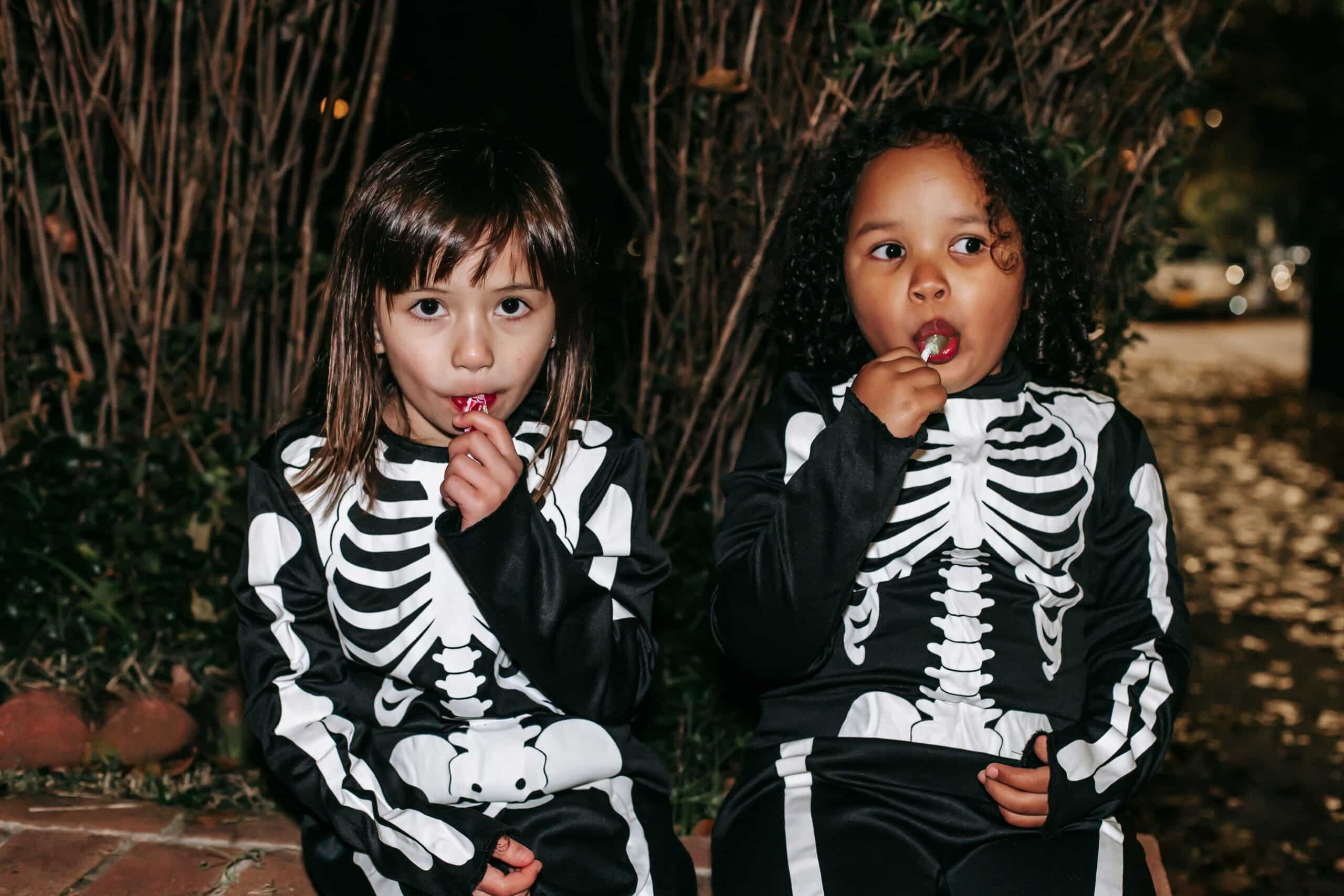
Hard candies and lollipops: These sweets dissolve slowly, keeping sugar in contact with your teeth for longer. Biting down on a hard candy can also chip or crack a tooth.
Sour candies: Sour gummies and hard candies often contain acids that can wear away tooth enamel. Their acidity, along with their sugar content, can increase the risk of damage to your teeth.
These are some of the worst Halloween candies for your teeth, so it’s best to enjoy them less often. The American Dental Association recommends avoiding or limiting these types of candy to help protect your teeth.
You do not have to give up Halloween treats to protect your smile. When it comes to Halloween candy and dental health, a few simple habits can help reduce the risk of cavities and enamel damage.
Enjoy candy with meals: Eating sweets with or shortly after a meal increases saliva production, which helps neutralize acids and supports the natural repair of tooth enamel.
Avoid grazing throughout the day: Rather than reaching into the candy bowl every few minutes, choose a portion to enjoy at one time. Limiting how often you eat sugary treats reduces the frequency of acid attacks on your teeth.
Drink water after eating candy: Water helps rinse away food particles and some remaining sugars. Although it cannot prevent cavities on its own, drinking water is a simple way to support good oral health.
Maintain your regular oral hygiene routine: Brush twice daily with fluoride toothpaste and floss between your teeth every day. These habits help remove plaque and protect against tooth decay.
Consistent oral hygiene and mindful snacking can help your family enjoy Halloween treats while taking care of their teeth. For more information, the National Institute of Dental and Craniofacial Research explains how tooth decay develops and how to help prevent it.
Sugar-free candy is definitely not the worst Halloween candy for teeth, as it is generally less likely to contribute to cavities. However, sugar-free does not automatically mean tooth-friendly. Sour varieties may contain acids that erode enamel, while hard candies can chip or crack teeth. When comparing Halloween candy for better teeth health, remember that ingredients, texture, and acidity all matter.
It is a good idea to brush your teeth twice daily with fluoride toothpaste, but you do not necessarily need to brush immediately after eating candy. If you have eaten acidic sweets, such as sour candy, wait about an hour before brushing. Acid temporarily softens enamel, and brushing too soon may contribute to enamel wear. In the meantime, rinse your mouth with water.
Let your child enjoy a reasonable portion of candy at one time rather than snacking on sweets throughout the day. When choosing the best Halloween candy for your teeth, opt for less sticky treats (such as plain chocolate) and limit hard candies, particularly for children with braces or certain dental restorations. Encourage drinking water after treats and maintain regular brushing with fluoride toothpaste. The goal is to establish healthy habits while allowing children to enjoy the holiday.
Choosing the best Halloween candy for your teeth doesn’t mean giving up your favorite treats. By limiting sticky, hard, and sour sweets, avoiding frequent snacking, and maintaining good oral hygiene, you can help protect your family’s smiles throughout Halloween. If you have any questions about your family’s oral health or choosing the best Halloween candy for teeth, our team here in Fort Collins is happy to help.
When you eat sugary foods, bacteria in your mouth feed on the sugars and produce acids that attack tooth enamel. Over time, repeated acid attacks can weaken enamel and lead to cavities.
According to the National Institute of Dental and Craniofacial Research, these acid attacks cause tooth enamel to lose minerals. Saliva helps restore some of those minerals, while fluoride strengthens enamel and protects against tooth decay.
When it comes to how Halloween candy affects your teeth, how often you eat sweets matters too. Frequently snacking on candy or sucking on hard sweets over an extended period exposes your teeth to repeated acid attacks. Giving your teeth a break between sugary treats allows saliva more time to help neutralize acids and restore lost minerals.
When choosing the best Halloween candy for your teeth, consider how much sugar a treat contains and whether it is likely to stick to your teeth. Some candies are easier to clear from the mouth than others, which can make them a better choice for your dental health.
Plain chocolate: Chocolate is generally a better option than sticky sweets (such as caramels and taffy) because it tends to clear from the mouth more easily. Choose varieties without caramel, toffee, or other sticky fillings that can leave sugary residue on teeth.
Sugar-free candy: Sugar-free varieties are generally less likely to cause cavities because they do not contain the sugars that bacteria feed on. However, check the ingredients, as sugar-free sour candy may still contain acids that erode enamel, and hard candies can chip or crack teeth.
When choosing Halloween candy for better teeth health, remember that no sugary treat is completely risk-free. However, choosing less sticky options and enjoying candy in moderation can help reduce the risk of tooth decay.
Some candies are harder on your teeth than others. Sticky sweets can cling to your teeth, while sugary and sour candies can increase the risk of cavities or enamel damage.
Sticky and chewy candies: Caramels, taffy, gummy bears, and similar sweets can stick to your teeth and get trapped between them. They’re often harder to remove, which means sugar can stay in contact with your teeth for longer. Sticky candies can also loosen fillings or damage braces.
Hard candies and lollipops: These sweets dissolve slowly, keeping sugar in contact with your teeth for longer. Biting down on a hard candy can also chip or crack a tooth.
Sour candies: Sour gummies and hard candies often contain acids that can wear away tooth enamel. Their acidity, along with their sugar content, can increase the risk of damage to your teeth.
These are some of the worst Halloween candies for your teeth, so it’s best to enjoy them less often. The American Dental Association recommends avoiding or limiting these types of candy to help protect your teeth.
You do not have to give up Halloween treats to protect your smile. When it comes to Halloween candy and dental health, a few simple habits can help reduce the risk of cavities and enamel damage.
Enjoy candy with meals: Eating sweets with or shortly after a meal increases saliva production, which helps neutralize acids and supports the natural repair of tooth enamel.
Avoid grazing throughout the day: Rather than reaching into the candy bowl every few minutes, choose a portion to enjoy at one time. Limiting how often you eat sugary treats reduces the frequency of acid attacks on your teeth.
Drink water after eating candy: Water helps rinse away food particles and some remaining sugars. Although it cannot prevent cavities on its own, drinking water is a simple way to support good oral health.
Maintain your regular oral hygiene routine: Brush twice daily with fluoride toothpaste and floss between your teeth every day. These habits help remove plaque and protect against tooth decay.
Consistent oral hygiene and mindful snacking can help your family enjoy Halloween treats while taking care of their teeth. For more information, the National Institute of Dental and Craniofacial Research explains how tooth decay develops and how to help prevent it.
Sugar-free candy is definitely not the worst Halloween candy for teeth, as it is generally less likely to contribute to cavities. However, sugar-free does not automatically mean tooth-friendly. Sour varieties may contain acids that erode enamel, while hard candies can chip or crack teeth. When comparing Halloween candy for better teeth health, remember that ingredients, texture, and acidity all matter.
It is a good idea to brush your teeth twice daily with fluoride toothpaste, but you do not necessarily need to brush immediately after eating candy. If you have eaten acidic sweets, such as sour candy, wait about an hour before brushing. Acid temporarily softens enamel, and brushing too soon may contribute to enamel wear. In the meantime, rinse your mouth with water.
Let your child enjoy a reasonable portion of candy at one time rather than snacking on sweets throughout the day. When choosing the best Halloween candy for your teeth, opt for less sticky treats (such as plain chocolate) and limit hard candies, particularly for children with braces or certain dental restorations. Encourage drinking water after treats and maintain regular brushing with fluoride toothpaste. The goal is to establish healthy habits while allowing children to enjoy the holiday.
Choosing the best Halloween candy for your teeth doesn’t mean giving up your favorite treats. By limiting sticky, hard, and sour sweets, avoiding frequent snacking, and maintaining good oral hygiene, you can help protect your family’s smiles throughout Halloween. If you have any questions about your family’s oral health or choosing the best Halloween candy for teeth, our team here in Fort Collins is happy to help.